

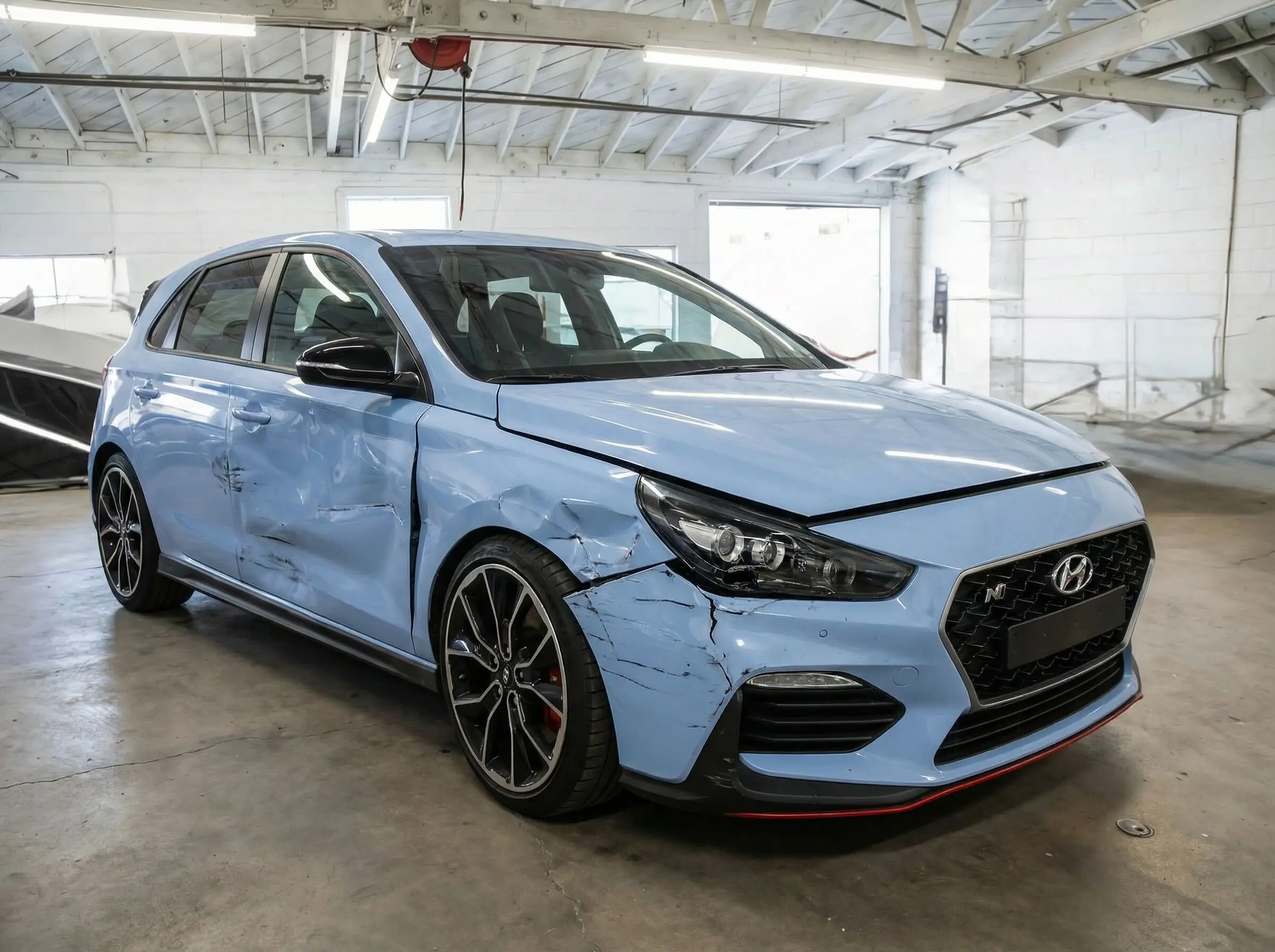
After a minor collision, begin with a slow walk-around of your vehicle. While cosmetic damage is common, some visible issues can directly affect safety.
Check for:
Damage to lighting or visibility areas can make the vehicle unsafe — and even illegal — to drive on public roads.
Even small impacts can affect steering and alignment components, creating instability while driving.
Warning signs include:
If you experience any of these, avoid driving until a professional inspection is completed.
Tires, wheels, and suspension systems absorb much of the impact during collisions — especially curb or side impacts.
Look for:
These symptoms often indicate deeper mechanical issues that require immediate attention.
Damage to hoses, radiators, or engine components can cause fluid leaks — even after minor accidents.
Common leak indicators:
Driving with fluid leaks risks overheating, transmission failure, and engine damage.
Modern vehicles depend on electronic safety systems such as airbags, ABS, and stability control.
Before driving, watch for:
Any persistent warning light means the vehicle should be inspected before normal use.
Driving with visible damage — such as broken lights or obstructed windshields — may result in fines in many areas.
Most insurance policies also require prompt accident reporting. Proper documentation including:
helps protect your claim and speeds up the repair process.
Arrange towing or professional help if you notice:
Continuing to drive can worsen damage and increase accident risk.
Hidden mechanical and structural issues are common after collisions — even minor ones.
A professional inspection ensures:
For Los Angeles drivers, Renew Collision Center offers comprehensive post-accident inspections and full-service repairs using certified technicians and advanced diagnostic equipment.
From structural repair to precision paint work and insurance coordination, Renew restores both safety and appearance.
A minor collision can still cause serious safety issues.
While some vehicles may be safe after a quick check, others require professional evaluation to uncover hidden damage. Taking time to inspect key areas — and consulting a trusted collision center when needed — protects both your vehicle and your safety on the road.


.svg)